
When the Scale Stops Moving: How to Break a Keto Plateau
Doing everything "right" but the scale won't budge? Here's how to tell if you're in a real plateau — and how to restart progress without extreme dieting or punishment.
It's 6:45 a.m. You've had your coffee. Finished your morning routine. You step onto the scale with that quiet flicker of hope.
You skipped the bread. Tracked your carbs. Walked past the office donuts for two straight weeks.
But the number staring back is exactly the same as last Tuesday.
And the Tuesday before that.
A keto plateau doesn't automatically mean your metabolism is broken. Most stalls are signals.
Quick Plateau Audit
At ClearKeto, we want to help you step back from the frustration before you start assuming something is wrong with your body.
If your weight has stalled, your body is doing what it's designed to do: stabilize. Sometimes it simply becomes efficient at holding its current state — that's normal biological adaptation.
Aggressive detoxes, starvation dieting, and endless cardio usually backfire. They add stress to a system that's already asking for balance.
A smarter approach is a metabolic audit.
Instead of panic, we look for the biological signals that may be slowing fat loss — and address those first.
Is It a Real Stall? How to Tell the Difference
Before changing your routine, it's important to define what a real plateau actually looks like.
Many people think they're "stuck" after three or four days without scale movement.
In reality, a true keto plateau is usually defined as four weeks or more with no meaningful change in:
- scale weight
- body measurements
- how your clothes fit
- progress photos
Your body doesn't move in straight lines.
Water retention, hormonal fluctuations, inflammation from exercise, digestion patterns, sodium intake, and sleep quality can all temporarily affect the scale — without reflecting actual fat loss or gain.
If it's only been one or two weeks, staying consistent is often the best strategy. Sometimes the scale just needs time to catch up.
But if nothing has changed for an entire month — weight, measurements, fit, photos — it's time to investigate a little deeper.
3 Sneaky "Keto" Foods That Quietly Stall Progress
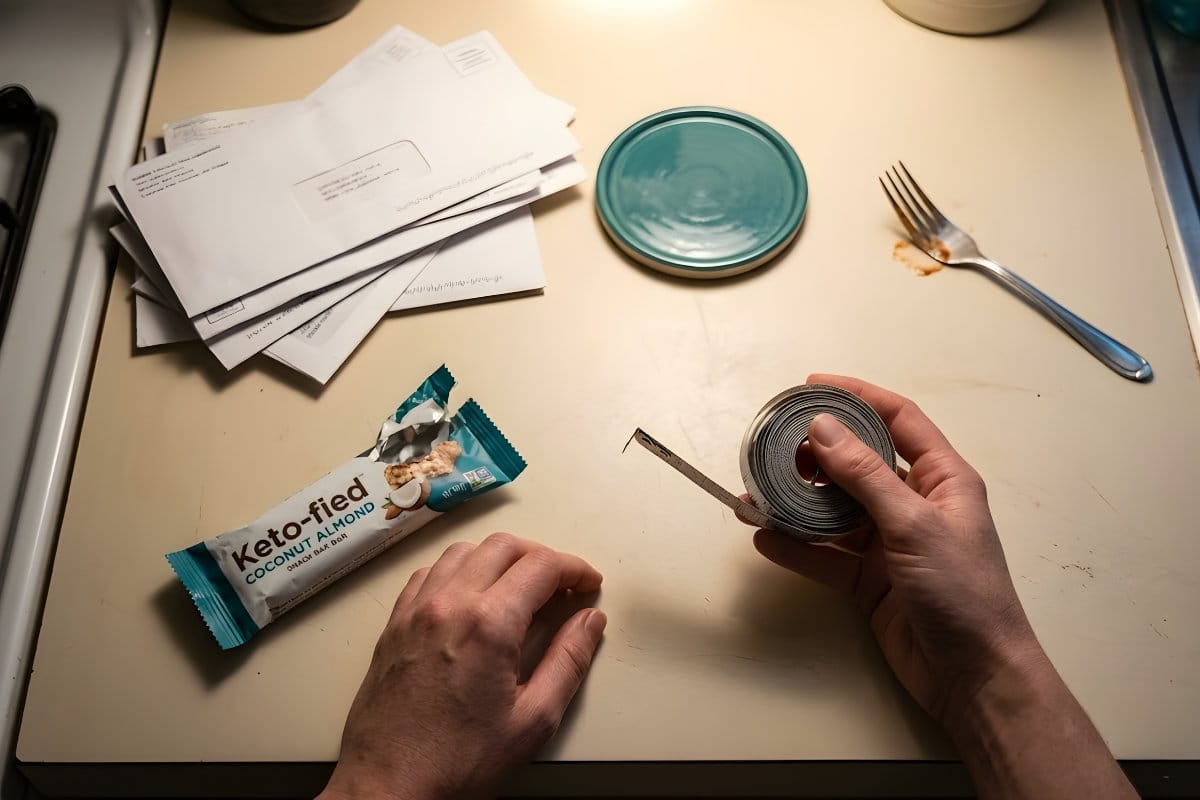
When people first start keto, packaged "keto-friendly" products often make the transition easier. They help you feel like you're not missing out.
But after adaptation, some of those same foods become the reason progress slows down — not because they're "bad," but because they make it easy to overeat without realizing it.
Most Common Plateau Triggers
- Keto replacements: Many keto breads, tortillas, and bars still trigger insulin responses or encourage overeating because they mimic the texture and reward of carb-heavy foods.
- Too much dairy: Cheese, cream, and butter are easy to overconsume. They're delicious, satisfying, and for some people, they can slow progress when portions creep up.
- Hidden sweeteners: Ingredients like maltitol may increase cravings and keep reward pathways activated — even if they don't technically "break" ketosis.
Sometimes the problem isn't carbs. It's how easy modern "keto products" make overeating without noticing.
The Macro Shift That Often Restarts Fat Loss
Most people assume they need to slash calories harder to break a plateau. They tighten restrictions, cut portions, add more cardio.
But in many cases, the issue isn't total calories. It's macro balance.
One of the most effective plateau strategies is increasing protein while slightly lowering added fats.
Your body can use stored body fat for energy — but only if total dietary fat stops overwhelming the system. When you eat more fat than your body needs for fuel, it has less reason to tap into reserves.
Simple 7-Day Plateau Reset
For many people, this alone is enough to restart momentum within a week or two. Not because it's extreme. Because it gives your metabolism a clearer signal.
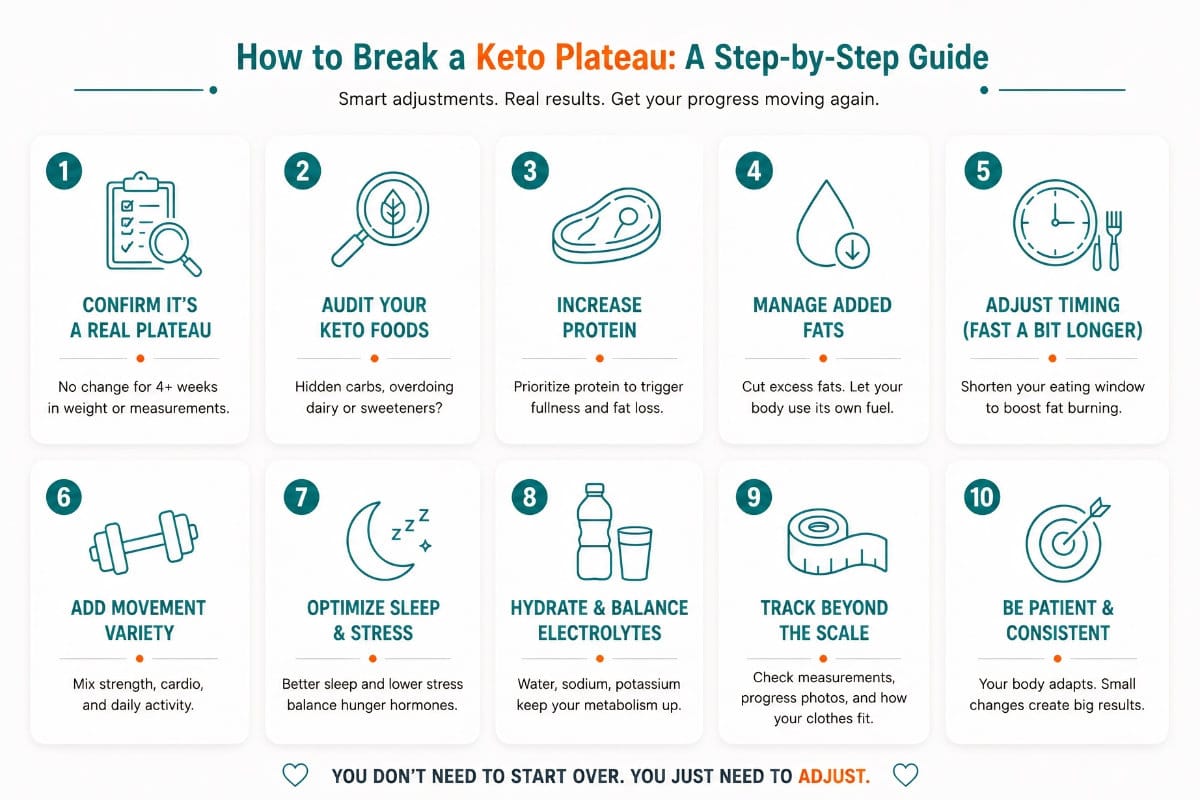
Why Stress Quietly Slows Fat Loss
Cortisol — your primary stress hormone — tells the body to conserve energy and retain water.
That means poor sleep, emotional stress, overtraining, and constant restriction can all make a plateau feel worse. When stress stays high, the body becomes more resistant to releasing stored energy efficiently.
Many people respond by becoming more aggressive with dieting, which only increases stress further. It becomes a loop: restrict more, stress more, stall more.
Improving recovery often moves the needle more than tightening restrictions. Creating better recovery conditions often improves fat loss consistency.
Your Body Is Looking for Stability, Not Punishment
A plateau is feedback.
Your body adapted to your current routine and now needs a new metabolic signal to keep moving forward.
That signal is usually not starvation or punishment. Those approaches work short-term but often backfire by increasing stress and cravings.
More often, progress restarts when you improve protein intake, reduce processed keto foods, manage stress a little better, and stay consistent long enough for the biology to catch up.
You don't have to overhaul everything. Small, steady adjustments often create the shift you're looking for.
Break the stall without panic
Download the STOP KETO CRAVINGS FAST Toolkit and get practical metabolic reset strategies for the moments progress feels stuck — no shame, no math, no starting over.
Download the toolkit →