
Keto Flu or Just Hungry? How to Fix Your Electrolytes Fast
That Day 4 crash — the fog, the headache, the desperate craving — isn't failure. It's a mineral leak. And you can fix it in minutes.
It's Day 4. You woke up moving like everything in your body had been dipped in wet cement.
By noon the brain fog came in so thick you had to read the same email three times. Now it's 3pm, your head is throbbing, and you're standing in front of the vending machine wondering if maybe — just maybe — you actually need sugar to function.
Probably not.
A lot of people search things like "why do I feel weak on keto" or "why do keto cravings hit so hard during the first week." In many cases, the answer is surprisingly simple: low electrolytes and dehydration.
Most people think keto flu means their body needs carbs again. Usually, it just needs minerals.
What you're feeling right now is not hunger. It's not weakness. It's not your body rejecting keto. It's one of the most common and most fixable things that happens in the first week: a keto electrolyte imbalance. The keto flu. And once you know what's behind it, you can do something about it.
You don't have to white-knuckle your way through this. Most of what people blame on keto in the first week isn't about calories or carbs at all. It's about minerals. And once you understand why your body loses them, many people start feeling more stable within minutes — not days.
Why Your Body "Leaks" Minerals on Keto
Here's what's happening under the surface — and it actually makes a lot of sense once you see it.
On a high-carb diet, your insulin stays elevated most of the day. One of insulin's quieter jobs is telling your kidneys to hold onto sodium. When you cut carbs, insulin drops — which is exactly what you want for fat burning. But your kidneys get a new message at the same time: stop holding sodium, start releasing it.
Sodium leaves. Water follows. That's the early "whoosh" of weight loss people talk about. But as water and sodium go, they take potassium and magnesium with them.
That's where the symptoms begin. You're not under-eating. You're not doing anything wrong. Your body is just running low on the minerals it needs to keep your energy, focus, and mood stable.
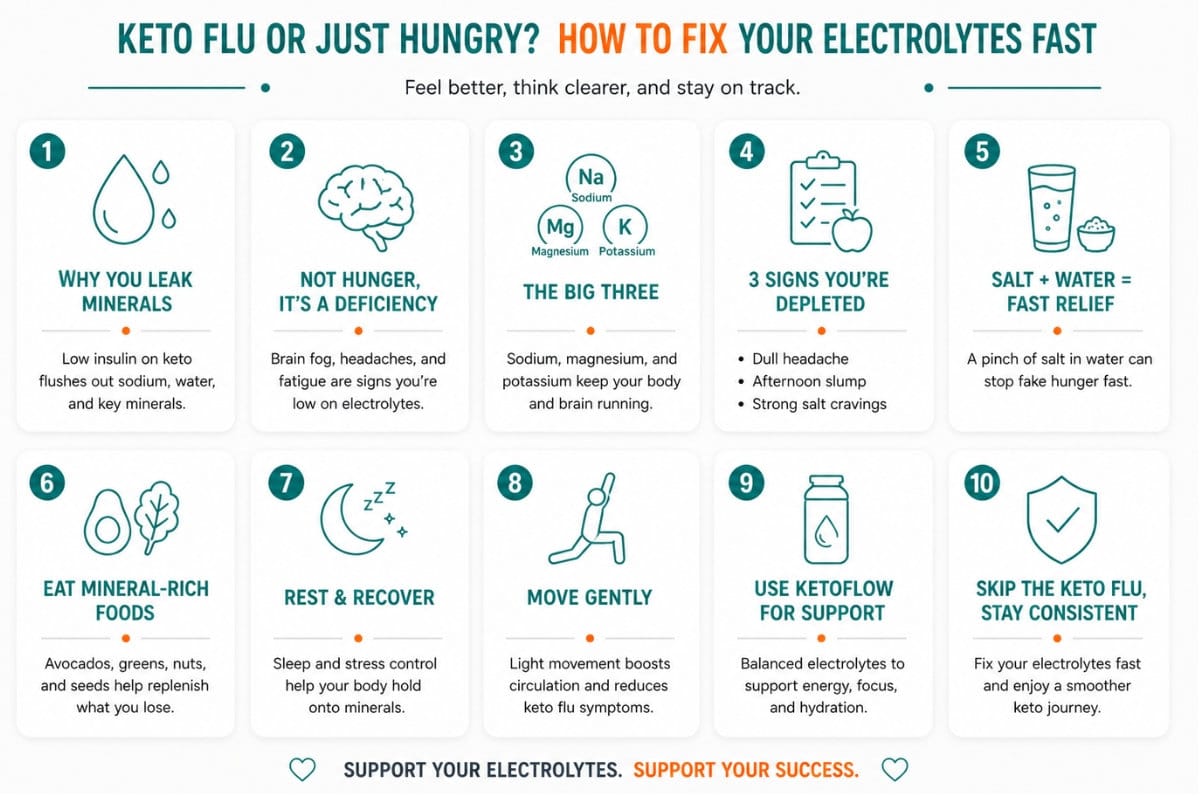
The Big Three: Sodium, Magnesium & Potassium
Think of electrolytes as your body's internal communication system. When they drop, the signals get garbled. Energy dips. Brain fog moves in. And cravings get very, very loud.
- Sodium is the foundation. When it drops, you get the classic keto flu — the headache behind your eyes, the fog, the leaden feeling in your legs.
- Potassium keeps your heart and muscles running. If you're cramping, feeling weak, or noticing a fluttery sensation in your chest, potassium may be low.
- Magnesium is the one everyone forgets. Wired but exhausted? Irritable for no real reason? Sleeping badly despite being tired? That's often magnesium.
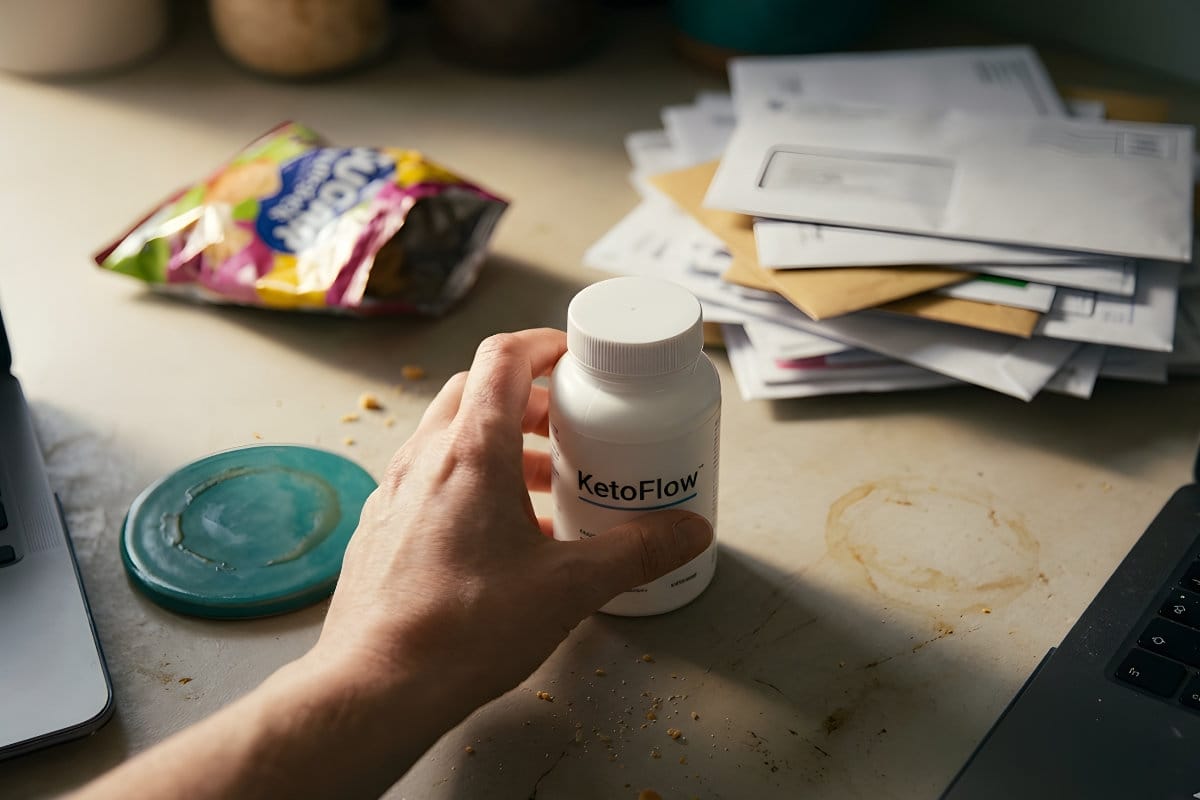
When those three fall out of balance, your brain misreads the whole situation as "I need food." More specifically: "I need sugar — fast." Because sugar is the quickest energy hit it remembers from before. But a cookie won't fix what's actually happening.
3 Signs Your "Cravings" Are Actually Dehydration
Before you reach for anything, check in with your body. If these show up together, you might not be hungry at all.
- The dull throb: A persistent headache sitting behind your eyes or across your forehead — that's often sodium leaving.
- The afternoon crash: You ate enough. You slept okay. But by 2pm you can barely keep your eyes open. Electrolytes are flagging.
- The salt craving: Suddenly you're thinking about pickles, salted broth, cheese crisps. Your body isn't being weird — it's trying to self-correct.
Instead of fighting the urge, give your body something that actually speaks to the real problem. A salty, keto-friendly snack works here precisely because it gives you sodium — without pulling you back into a sugar cycle.
Why Keto Flu Symptoms Often Feel Like Sugar Cravings
How to Fix Electrolytes Fast
You don't need to suffer through this. Keto flu is not a rite of passage. In most cases, you can start feeling measurably better within 20 minutes.
The protocol itself is deliberately minimal. You don't need complex powders or precise milligram calculations to stabilize the initial drop. Your body just needs a clear, bioavailable signal that the sodium deficit is being addressed.
Rapid Electrolyte Reset
Most people notice the headache, fog, or "fake hunger" ease within 20 minutes once sodium and fluids are restored.
The sequence matters more than the volume. Your nervous system doesn't need a flood of sodium all at once; it needs a steady signal that the deficit is being addressed. Sipping slowly allows the gut to pull water into the bloodstream without triggering a diuretic rebound. That's why rushing the glass usually backfires — you end up right back where you started, only more dehydrated.
Once the protocol is clear, the next step is having a reliable fallback that doesn't require planning or special ingredients. This is where most adaptation phases break down: not from lack of effort, but from lack of a simple, repeatable option when brain fog hits. The recipe below works precisely because it strips away complexity and focuses on the three minerals your body is actively signaling for.
Simple Ketoade (No Special Tools Needed)
If you're mid-brain-fog emergency and have nothing prepared — make this right now, wherever you are:
- 16 oz water (still or sparkling — either works)
- ¼ tsp sea salt
- 1 tbsp lemon or lime juice
Stir it. Sip it slowly over 20 minutes. Don't chug — let your body actually absorb it. Most people find that the headache softens, the shakiness fades, and that unbearable hunger loosens its grip before the glass is even empty. If you finish it and you're still genuinely hungry — then eat. But reach for something that supports where you are: a small fat-based snack, a salty protein option. Something that satisfies without turning a mineral problem into a carb spiral.
Sugar feels like the answer. But the real problem is almost always mineral depletion — and no amount of carbs fixes that.
Why This Matters More Than Motivation
The first week of keto is where most people make up their minds about whether this "works" for them. But here's the thing — that decision is often made while running low on sodium, low on magnesium, foggy, exhausted, and completely convinced their body needs carbs to survive.
That's not a fair test. That's not what keto actually feels like.
Electrolytes aren't a fine-print detail. They're the difference between "I can't do this" and "oh — so this is what my body needed." Once the three minerals stabilize, the symptoms people blame on keto begin to quiet down. Energy gets predictable. Focus comes back. Cravings lose their urgency. Keto starts to feel like something your body can actually settle into — not something you're enduring.
You don't need more punishment. You need better signals.
You Aren't Failing — You're Adjusting
The most important thing to hold onto during week one: these symptoms are a sign of change, not a sign that something is wrong with you.
Your body is shifting fuel systems. It's learning to run differently — to access stored fat more efficiently, to operate without the constant glucose spikes it used to rely on. That's real, meaningful work. And it can feel uncomfortable if you don't support it.
Don't let a temporary mineral shortage convince you that keto doesn't work for you. Fix the minerals. Quiet the flu. Then keep going — because the other side of this is worth it.
Stop Keto Cravings Fast
Get the first step of the Keto Recovery System™ — a practical recovery guide for cravings, low energy, and getting back on track without starting over.
Get the Free Recovery Guide